
On November 8, 2023, the FDA approved Zepbound (tirzepatide) injection for chronic weight management in adults with a BMI of 30 or greater, or 27 or greater with at least one weight-related condition, alongside a reduced-calorie diet and increased physical activity. Tirzepatide was already approved as Mounjaro for type 2 diabetes. The approval was based on two 72-week trials. For weight loss clinics, it added a second major branded option and raised the bar for accurate, evidence-based program marketing.
By late 2023, GLP-1 medications had transformed weight loss care. Semaglutide, sold as Wegovy for weight management, had dominated the conversation, and supply problems had pushed many patients toward compounded versions. Clinics had spent much of the year answering questions about shortages, sourcing and safety. Then, on November 8, 2023, the FDA approved a second major option.
Zepbound, the weight management brand of tirzepatide, gave patients and clinicians another FDA-approved choice. It arrived with a clear indication, a defined dosing schedule and large published trial evidence, all of which gave clinics solid material for accurate patient education and a reason to revisit how their programs were described. For weight loss clinics, the approval changed patient questions, program design and the way responsible marketing described treatment.
This retrospective covers what happened and what it means today. It connects to our coverage of the 2023 compounded semaglutide warning, the 2024 tirzepatide shortage resolution and the 2025 end of the GLP-1 shortages.
What actually happened in 2023
November 8: the approval. The FDA approved Zepbound (tirzepatide) injection for chronic weight management in adults with obesity, defined as a BMI of 30 or greater, or overweight, a BMI of 27 or greater, with at least one weight-related condition such as high blood pressure, type 2 diabetes or high cholesterol. It is used with a reduced-calorie diet and increased physical activity.
Same ingredient, different brand. Tirzepatide was already approved as Mounjaro to improve blood sugar in adults with type 2 diabetes. The FDA said Zepbound activates receptors for two intestinal hormones, GLP-1 and GIP, to reduce appetite and food intake.
Dosing. Zepbound is injected once weekly, with the dose increased over four to 20 weeks to target doses of 5 mg, 10 mg or 15 mg.
The evidence. Effectiveness was established in two randomized, double-blind, placebo-controlled trials measuring weight reduction after 72 weeks, with 2,519 patients receiving Zepbound and 958 receiving placebo.
Safety. The FDA listed side effects including nausea, diarrhea, vomiting and constipation, and noted a warning about thyroid C-cell tumors seen in rats. The agency said approximately 70% of American adults have obesity or overweight.
Why it mattered for weight loss clinics
A second FDA-approved weight management medication changed the conversation in clinics. Patients arrived asking which drug was better for them, whether they qualified and what it would cost. Clinics needed clear, accurate answers rather than marketing slogans. The front desk, the website and the consultation all had to tell the same story, because patients compared what they heard with what they read online.
The approval also sharpened the brand-name issue. Patients searched for “Zepbound” and “Mounjaro” by name, and some advertisers used those names loosely. As we covered in our semaglutide retrospective, using brand names for products that are not the branded drug carries legal risk.
Finally, the approval reinforced that medication works alongside diet and activity. The indication itself says so, which gave clinics a clear basis for presenting comprehensive programs rather than prescriptions alone. That framing distinguished established clinics from quick-start online offers.
What typical agencies did
Many agencies rushed to add “Zepbound” to ad copy and landing pages, sometimes for programs that did not prescribe it. Others built comparison content that cherry-picked trial numbers. Promotions emphasized speed and low price, and eligibility was often an afterthought buried below the booking button.
The better approach created accurate educational content: who qualifies, how the medication works in general terms, what side effects to expect, what the clinic’s program includes and how prescribing decisions are made.
What it means for a weight loss clinic today
Supply, pricing and rules have changed since 2023, but these principles hold.
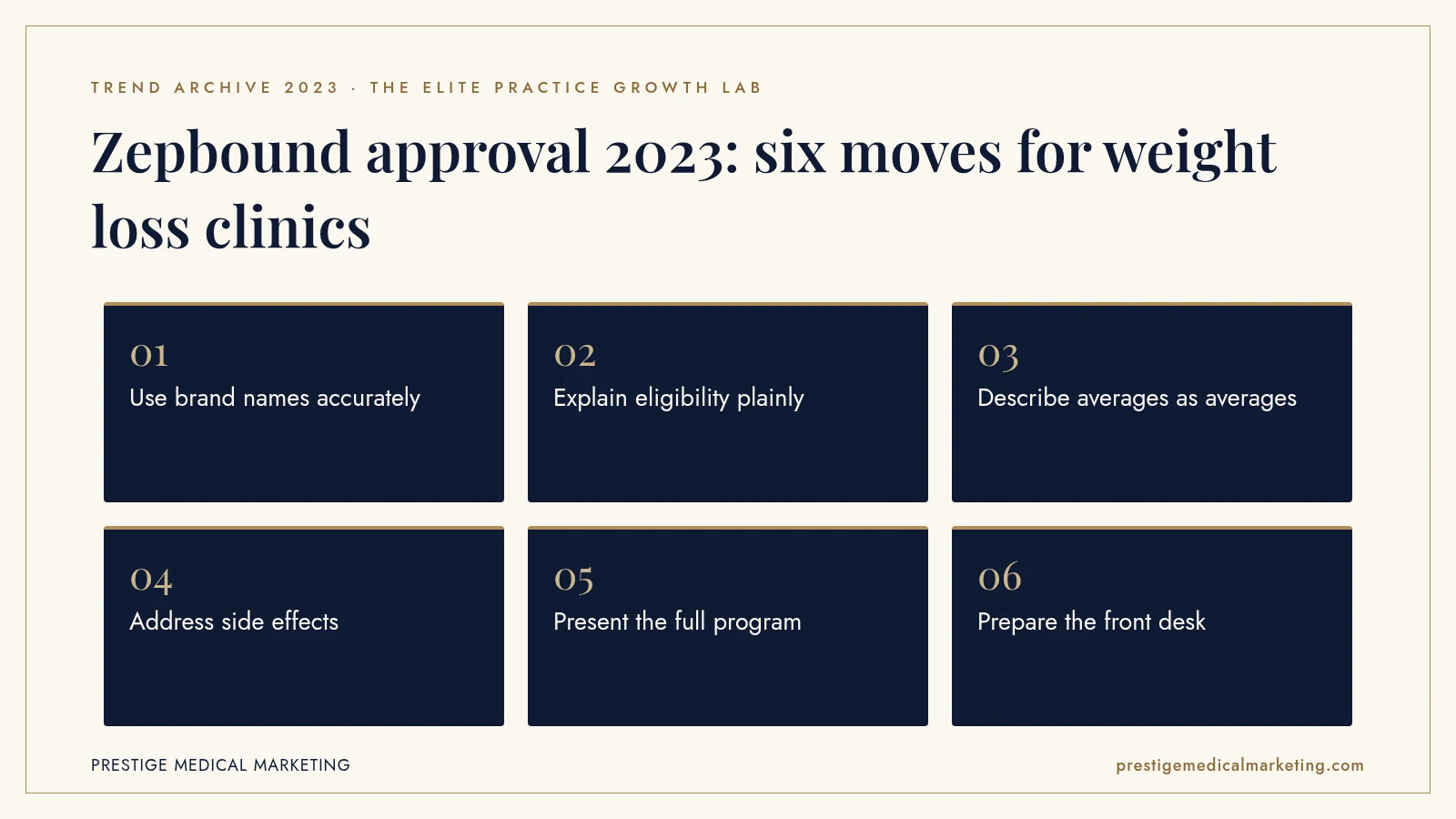
1. Use brand names accurately
Mention Zepbound or Mounjaro only when referring to those products, and describe any alternative accurately. Also avoid using brand names as keywords or hashtags for programs that do not prescribe them.
2. Explain eligibility plainly
Publish the general criteria and explain that a clinician makes the final decision after evaluation. Mention that some conditions and histories make these medications inappropriate.
3. Describe averages as averages
If you reference trial results, present them as study averages and note that individual results vary. Link to the official source rather than restating numbers out of their context.
4. Address side effects
Explain common side effects and how the clinic monitors and adjusts treatment. Make it easy for patients to reach the care team between visits.
5. Present the full program
Nutrition, activity, follow-up and long-term planning belong in every program description. The approved indication itself pairs the medication with diet and activity.
6. Prepare the front desk
Staff should answer common questions about eligibility, cost and process consistently and accurately. A short script, reviewed by the medical director, prevents mixed messages on the phone.

Comparison content done right
Patients want to understand differences between medications, and search engines reward helpful comparison content. The responsible version explains what each medication is, what it is approved for, how it is given and what is generally known, citing official sources such as FDA announcements and labeling. It avoids declaring one drug “better” for everyone and makes clear that the right choice depends on an individual evaluation.
That kind of content builds authority and brings in well-informed patients. It also tends to be cited by AI assistants, which increasingly favor accurate, sourced explanations. Our weight loss clinic marketing guide shows how to structure it. Keeping such pages updated matters, because labeling, supply and coverage change, and outdated information undermines trust quickly.
Cost and coverage conversations
Cost became one of the biggest questions after the approval. Insurance coverage for weight management medications varied widely, and many patients faced high out-of-pocket costs. Clinics that explained cost factors honestly, including medication, visits and labs, earned more trust than those that hid prices.
Marketing should not promise coverage or specific prices that may change. Instead, explain how the clinic helps patients understand their options and what the program fee includes. A simple page that lists what is included in each program tier, and what costs sit outside it, prevents frustration and reduces no-shows from people surprised at the consultation.
Search demand shifted overnight
Brand approvals create sudden search demand. After November 2023, searches for Zepbound and related terms grew quickly. Clinics with fast, well-structured websites and clear medication pages could capture interest by publishing accurate information promptly. Those relying only on paid ads faced platform restrictions on prescription drug advertising.
Organic search and local visibility gave clinics a more durable channel, one that did not depend on ad approvals or bidding wars over brand terms. A strong Google Business Profile and a website that answers common questions accurately help a clinic appear when people look for weight loss care nearby.
Prescription drug advertising rules
Promoting a specific prescription drug brings rules that ordinary service marketing does not. Drug manufacturers face FDA requirements for balanced information about benefits and risks, and ad platforms have their own prescription drug policies, often requiring certification. Clinics are generally promoting their medical services rather than a drug, but ads that focus heavily on a named medication can draw attention from platforms and regulators.
The safer pattern is to market the clinic’s evaluation and program, and to describe medications in educational content with balanced information. We covered how scrutiny intensified in our piece on the FDA’s 2025 drug ad crackdown, which shows why this matters more over time, not less.
The consultation is the product
When a new medication becomes available, it is tempting to market the medication itself. But the medication is available from many sources. What a clinic actually offers is the evaluation, the judgment of an experienced clinician, the monitoring and the support that helps a patient succeed over months.
Marketing that makes the consultation the centerpiece attracts patients who value that care. It also protects the clinic when supply or pricing changes, because the relationship is with the practice, not with a particular drug. Clinics that built their brand on a single medication found themselves exposed every time the market shifted.
Supporting patients through side effects
The FDA’s announcement listed common gastrointestinal side effects such as nausea, diarrhea, vomiting and constipation. Patients who experience these without preparation may stop treatment or lose confidence in the clinic. Clinics that explain what to expect, how dose increases are managed and how to reach the care team build loyalty.
That support is also a marketing asset. Content about how the clinic helps patients through the early weeks, and reviews that mention responsive care, speak to the concerns people actually have when choosing a provider.
Muscle, nutrition and long-term health
As GLP-1 treatment spread, attention turned to the quality of weight loss, including preserving muscle and maintaining nutrition while eating less. Clinics that include nutrition counseling, protein guidance, strength training recommendations and body composition tracking can describe a more complete program than a prescription alone.
Those program elements also give clinics something specific and honest to say in marketing. Instead of promising a number, a clinic can describe how it supports healthy, sustainable change. That message resonates with the patients most likely to stay in care.
Reviews and reputation in a crowded market
As more providers entered weight loss care, patients relied heavily on reviews to choose. Reviews that mention attentive clinicians, clear communication and steady support carry more weight than generic praise. Clinics should ask for reviews consistently, respond to them professionally and never offer incentives in exchange for positive feedback. Responses should never confirm that a reviewer is a patient or discuss their treatment, which protects privacy. Our reputation and premium pricing guide covers the process in detail.
Men’s and women’s health crossovers
Weight management connects to other services many clinics offer, such as hormone care, men’s health and menopause care. Patients who come for weight loss may also have related concerns. Clinics that offer coordinated care can describe how services fit together, while being careful not to overstate any treatment’s benefits. We cover adjacent topics in our 2025 menopause hormone therapy retrospective.
What 2023 does not tell us
The approval did not settle questions of long-term outcomes for individual patients, insurance coverage trends or supply, which changed significantly in 2024 and 2025. What 2023 does show is the documented indication, dosing and evidence base the FDA described, which is the right foundation for accurate marketing.
The premium practice advantage
Premium weight loss clinics lead with medical clarity. Visit our weight loss marketing service, our services, who we help and our approach to Google Maps and AI search visibility. Our team works from Austin with practices nationwide.
The bottom line
The 2023 Zepbound approval gave patients another FDA-approved option and gave clinics a reason to market with precision. Clinics that explain eligibility, evidence and programs accurately earn the most qualified patients.
Check if your market is open. We take one practice per specialty per market. Request a market check or call (716) 400-0084.
Frequently asked questions
When was Zepbound approved?
The FDA approved Zepbound (tirzepatide) for chronic weight management on November 8, 2023.
Who is Zepbound approved for?
Adults with obesity (BMI of 30 or greater) or overweight (BMI of 27 or greater) with at least one weight-related condition, used with a reduced-calorie diet and increased physical activity.
How is Zepbound related to Mounjaro?
Both contain tirzepatide. Mounjaro was already approved to improve blood sugar in adults with type 2 diabetes. Zepbound is the brand approved for chronic weight management.
What evidence supported the approval?
Two randomized, double-blind, placebo-controlled 72-week trials, with 2,519 patients receiving Zepbound and 958 receiving placebo, according to the FDA.
Can a clinic advertise results from the trials?
Trial results describe averages under study conditions, not guaranteed individual outcomes. Clinics should avoid promising specific results and get advice on prescription drug promotion rules.
What should weight loss clinics take from the approval?
Describe medications accurately, explain eligibility and side effects, avoid brand confusion and present medication as one part of a supervised program.