
In 2022, the FDA approved two oral testosterone undecanoate capsules: Tlando, with labeling dated March 2022, and Kyzatrex, with labeling dated July 2022. Both labels carried a boxed warning that the drugs can raise blood pressure, increasing the risk of major cardiovascular events, and limited use to men with hypogonadal conditions associated with structural or genetic causes. For men's health clinics, the lesson was to market testosterone therapy around proper diagnosis and monitoring, not convenience.
Testosterone therapy is central to many men’s health clinics. Patients arrive with symptoms such as low energy, low libido or changes in mood and body composition, and many have already read about testosterone online. The format of therapy matters to them, and injections, gels and pellets each have trade-offs.
In 2022, the FDA approved two oral options. Tlando and Kyzatrex, both testosterone undecanoate capsules, offered a format many patients found appealing. Their labels also carried a boxed warning on blood pressure and a narrow approved population, which made them a useful case study in how to market convenience responsibly.
This retrospective covers what the FDA approved in 2022 and what it means for a men’s health clinic today. For related men’s health chapters, see the TRAVERSE trial of 2023, the 2025 testosterone label changes and the Meta pixel investigation of 2022.
What actually happened in 2022
Tlando. The FDA label for Tlando, testosterone undecanoate capsules for oral use, is dated March 2022. It sets a recommended dose of 225 mg twice daily with food.
Kyzatrex. The FDA label for Kyzatrex, also testosterone undecanoate capsules for oral use, is dated July 2022. It sets a starting dose of 200 mg in the morning and evening, adjusted based on blood levels, and states it is not substitutable with other oral testosterone undecanoate products.
Boxed warning. Both labels carried a boxed warning that the drug can cause blood pressure increases that can increase the risk of major adverse cardiovascular events, including non-fatal myocardial infarction, non-fatal stroke and cardiovascular death.
Narrow population. Because of that risk, both 2022 labels said to use the drug only in men with hypogonadal conditions associated with structural or genetic causes, and listed hypogonadal conditions not associated with those causes, such as age-related hypogonadism, as a contraindication, noting that efficacy had not been established for them.
Diagnosis first. Both labels required confirming hypogonadism with morning serum testosterone measured on at least two separate days and below the normal range.
Controlled substance. Both products are labeled Schedule III, like other testosterone products.
Why it mattered for men’s health clinics
Oral therapy is appealing. Many men prefer a capsule to an injection, and new oral options generated interest and search activity. Men’s health clinics faced a choice about how to present them.
The labels made the boundaries clear. They described a specific population, a diagnostic standard and a serious warning about blood pressure and cardiovascular events. A clinic promoting oral testosterone as a convenient answer to fatigue or aging would have been marketing to people outside the approved population.
The approvals also reinforced a broader point. Every testosterone product carries risks that require diagnosis, monitoring and medical judgment. Marketing that focuses on format or convenience while minimizing those requirements undermines trust and can attract regulatory attention.
What typical agencies did
Some agencies wrote ads and landing pages that presented oral testosterone as a simple pill for energy, vitality or aging, without mentioning diagnosis, monitoring or the boxed warning. Some implied any man with symptoms could qualify.
Others ignored the approvals entirely and continued to market a single format, missing the chance to explain options clearly to patients who were already asking about them.
The careful approach explained the available formats honestly, emphasized proper diagnosis and monitoring, avoided implying broad eligibility and kept product claims tied to current labeling.
What it means for a men’s health clinic today
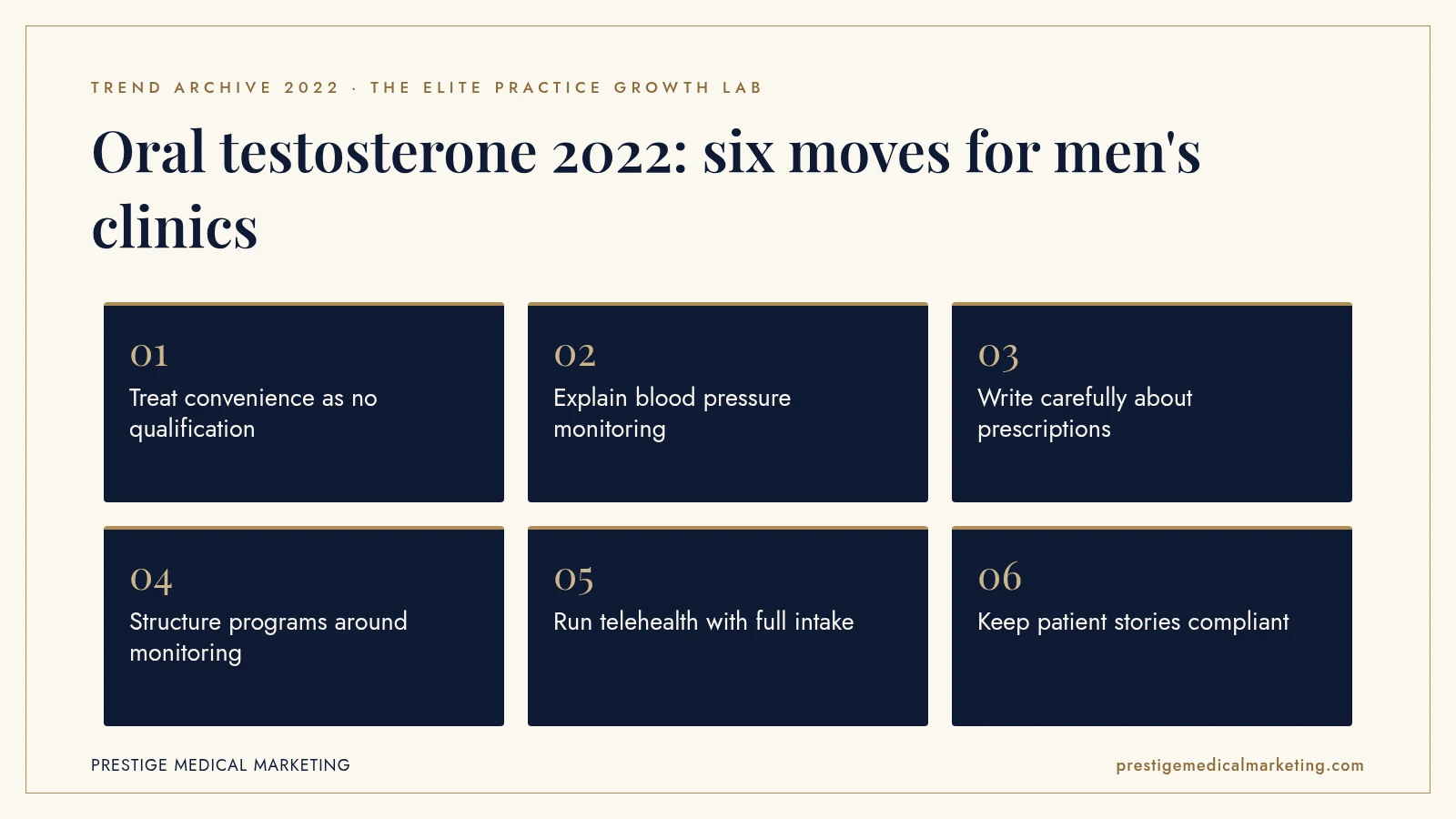
Testosterone labeling has changed since 2022. These principles still apply.
1. Lead with diagnosis
Explain that therapy starts with a medical evaluation and repeated morning testosterone testing.
2. Describe formats neutrally
Present injections, gels, pellets and oral options as choices made with a clinician, not as products to buy.
3. Acknowledge warnings
Mention that testosterone products carry serious warnings, including on blood pressure.
4. Explain monitoring
Describe follow-up labs, blood pressure checks and visits as part of the program.
5. Avoid lifestyle promises
Do not promise energy, muscle, libido or youth. Effects vary and depend on diagnosis.
6. Use current labels
Check current prescribing information before writing about any product.

Convenience is not a qualification
The appeal of an oral option is understandable. A capsule fits easily into a routine and avoids needles. But convenience does not change who should receive the therapy. The 2022 labels were explicit that the drugs were for men with confirmed hypogonadism associated with structural or genetic causes, and they listed age-related hypogonadism without such causes as a contraindication.
Clinics that market oral therapy around convenience risk attracting men who do not meet clinical criteria, and then face an uncomfortable choice between disappointing them and prescribing outside appropriate use. Clinics that market around evaluation and diagnosis attract men who want to know what is really going on, and they can discuss formats once a diagnosis is established.
Blood pressure and monitoring
The boxed warning on both labels centered on blood pressure. The labels described ambulatory blood pressure monitoring studies and advised clinicians to consider baseline cardiovascular risk, ensure blood pressure was controlled before starting and monitor for new or worsening hypertension.
That has practical implications for how a clinic describes its program. Blood pressure checks, lab work and follow-up visits are not obstacles. They are what make therapy appropriate and safe. A program page that explains the monitoring schedule in plain language sets realistic expectations and signals that the clinic takes safety seriously.
The Kyzatrex label also advised monitoring hemoglobin or hematocrit and evaluating for prostate issues, including PSA testing before and during treatment. These are standard elements of a responsible testosterone program, and they belong in patient education.
Writing about prescription products
Prescription drug marketing is regulated, and men’s health is an area of active scrutiny. Content that names a specific product should reflect its current approved use, include important safety information and avoid claims the label does not support. Comparisons between products should be accurate and fair.
Many clinics find it more useful to write about the treatment approach rather than individual brands. A page explaining how the clinic evaluates low testosterone, what formats exist, how clinicians choose among them and what monitoring involves answers patients’ real questions without turning the page into an advertisement for a single product.
Clinical leadership should review all treatment content, and pages should show when they were last reviewed. Testosterone labeling has changed since 2022, and outdated content can mislead patients and create risk for the clinic.
Search interest and new formats
New product approvals tend to create a burst of search interest. Men read a headline about a testosterone pill and search for it by name, often alongside their city or the phrase near me. Clinics that publish clear, accurate information about oral options at that moment can earn attention from people who are actively researching.
The opportunity comes with responsibility. A page written to capture that traffic should explain who the products are for, what the label requires before treatment and what monitoring involves. It should not suggest that anyone searching can simply order a prescription. Pages that answer the real question honestly tend to hold up better in search over time than pages written purely to rank, and they build trust with readers who arrive skeptical.
The same principle applies to AI assistants. When men ask an assistant about oral testosterone, the answer will draw on sources that explain eligibility, risks and monitoring. A clinic page that does this clearly is more likely to be useful to those systems than one that reads like an advertisement.
Pricing and program structure
Men’s health clinics often package testosterone therapy as a monthly program that includes visits, labs and medication. That can work well when the package is transparent. Patients should understand what is included, what costs extra, how often labs are drawn and what happens if a clinician decides therapy should change or stop.
Programs priced around a specific product can create pressure to keep patients on that product. Pricing around care, meaning evaluation, monitoring and follow-up, keeps the clinic’s incentives aligned with the patient’s health and makes it easier to change formats when that is clinically appropriate.
Telehealth and remote programs
Many men’s health clinics run telehealth programs, and oral options fit naturally into remote care. That makes the diagnostic and monitoring requirements even more important to communicate. Patients need to know how lab testing, blood pressure readings and follow-up visits will happen when they are not in the office.
A clear explanation of how the clinic handles remote labs, home blood pressure monitoring and check-ins shows patients that convenience has not replaced care. It also helps filter out people looking for a quick prescription with no oversight.
Controlled substance rules matter here too. Testosterone products are Schedule III, and prescribing rules for controlled substances through telehealth have been the subject of ongoing federal attention since 2022. Clinics should confirm their remote prescribing practices meet current requirements before promoting telehealth testosterone programs.
Intake that sets expectations
A good intake process asks about symptoms, medical history, cardiovascular risk factors, current medications and goals. It explains that therapy depends on lab results and clinical evaluation, and that some men will not be candidates. It also covers what monitoring will involve if therapy begins.
Online forms and booking pages can support that process. A consultation page that explains the steps from first visit to treatment decision helps men arrive informed and reduces disappointment when a clinician recommends a different path.
Reviews and patient stories
Patient stories are powerful in men’s health marketing, and they carry risk. A testimonial describing dramatic results from testosterone therapy can create expectations that most patients will not experience and may imply results that are not typical. The FTC’s endorsement guidance applies to testimonials, and claims in reviews used in marketing can be attributed to the clinic.
A more durable approach highlights the experience of care: how clear the explanations were, how thorough the evaluation felt and how well the clinic followed up. Those stories build trust without promising outcomes.
What 2022 does not tell us
The 2022 approvals established two oral options with specific labels. They did not settle broader questions about testosterone and cardiovascular risk, which later research such as the TRAVERSE trial addressed, or predict how testosterone labeling would change in later years. Clinics should treat the 2022 labels as history and rely on current prescribing information.
The premium practice advantage
A premium men’s health clinic earns trust through medical rigor and honest communication. See our men’s health services, our guide to men’s health clinic marketing, our approach to reputation and premium pricing, our full services, who we help and how we approach Google Maps and AI search visibility. Our team works from Austin with practices nationwide.
The bottom line
In 2022, the FDA approved two oral testosterone capsules with boxed warnings on blood pressure and a narrow approved population. For men’s health clinics, the lesson was to market evaluation and monitoring, not convenience, and to keep every claim tied to current labeling.
Check if your market is open. We take one practice per specialty per market. Request a market check or call (716) 400-0084.
Frequently asked questions
Which oral testosterone products were approved in 2022?
Tlando and Kyzatrex, both testosterone undecanoate capsules for oral use. Their FDA labels are dated March 2022 and July 2022.
What boxed warning did they carry?
Both labels warned that the drugs can cause blood pressure increases that can raise the risk of major adverse cardiovascular events, including non-fatal heart attack, non-fatal stroke and cardiovascular death.
Who were they approved for?
The 2022 labels limited use to men with hypogonadal conditions associated with structural or genetic causes, and listed conditions such as age-related hypogonadism without those causes as a contraindication.
How do the labels say hypogonadism should be confirmed?
By measuring serum testosterone in the morning on at least two separate days and confirming the levels are below the normal range.
Are oral testosterone products controlled substances?
Yes. Both labels identify the products as Schedule III controlled substances.
Have testosterone labels changed since 2022?
Yes. Testosterone labeling has been updated since 2022, so clinics should check current prescribing information rather than rely on the 2022 versions.