
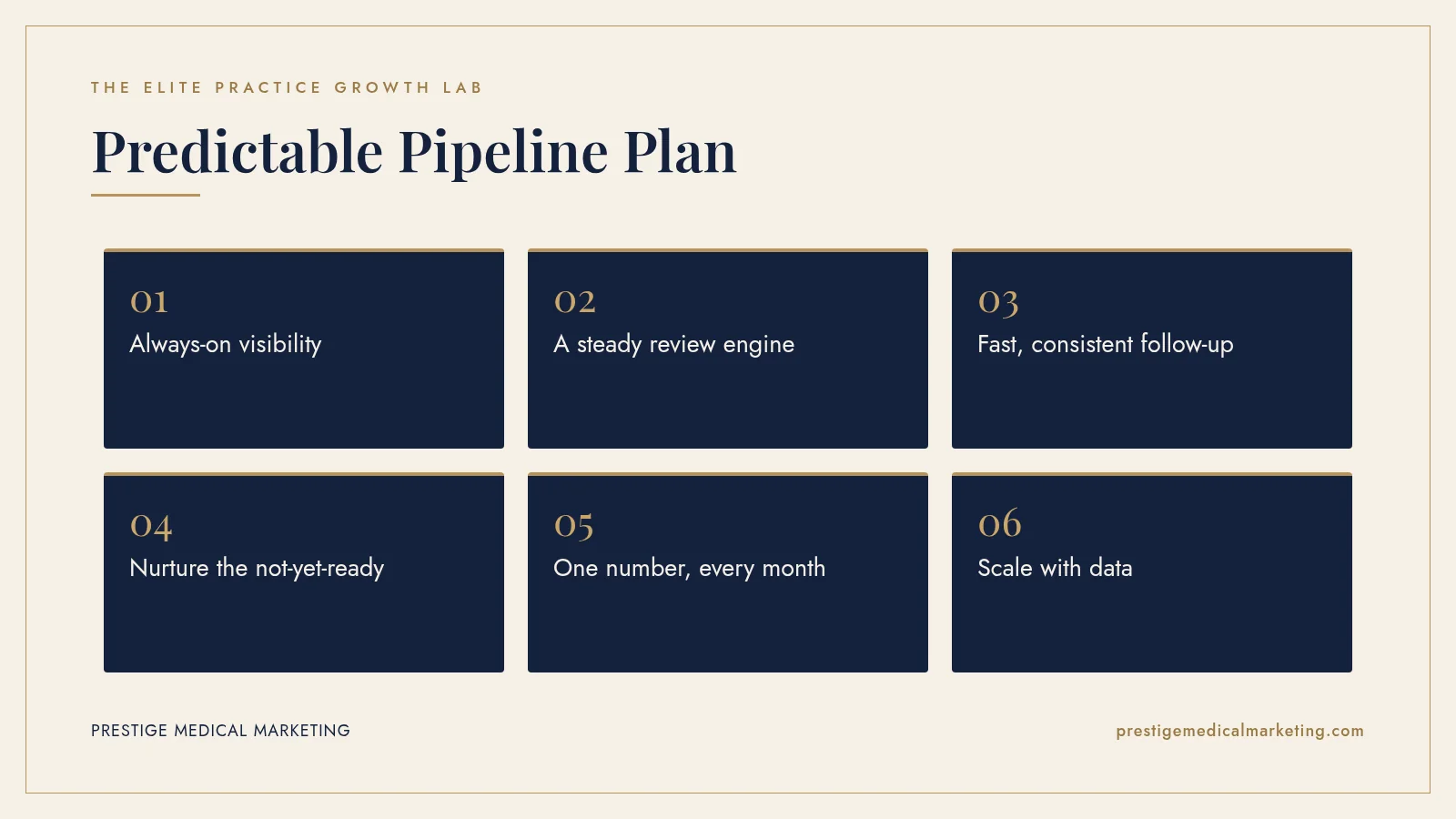
A predictable patient pipeline combines always-on visibility (Google Maps, search and AI recommendations), steady review generation, fast follow-up on every inquiry, and nurturing for people not ready to book yet, all measured monthly by booked patients and revenue. Relying on one channel or one-off promotions is what creates feast-or-famine months.
Feast-or-famine months are exhausting. One month you’re turning people away; the next, the schedule has holes and you’re wondering whether to run a promotion. It makes hiring, buying equipment or opening a location feel like a gamble.
Where growth plans go wrong, and how we do it instead
They chase quick spikes. We build steady systems.
A big promotion fills one month and empties the next. We build channels that produce new patients every week, so you can plan around them.
They depend on one channel. We diversify.
When one ad platform or one referral source carries the practice, any change can sink a month. We build local search, Maps, reviews, your website and at least one paid or referral channel into one system.
They guess. We measure.
Our monthly ROI reporting shows booked patients, their value and your spend every month, so you see trends before they become problems.
They lock you in. We earn it monthly.
Month-to-month terms and one practice per specialty per market, so we never split attention between you and a competitor down the street.

Check if your market is open. Request a market check or call (716) 400-0084.
Why the schedule is unpredictable
- One-channel dependence: referrals or a single ad platform carry everything.
- Promotion spikes: a sale fills the calendar, then demand drops.
- Leaky follow-up: interest is there, but not everyone gets booked.
- No visibility: without clear numbers, you only notice a slow month once it arrives.
Layer 1: Always-on visibility
Your Google Business Profile, service pages and AI search presence work every day without a campaign. Patients searching right now should find you right now, on a website built to turn that visit into a booking. Our guide to a low-maintenance website covers the essentials. This foundation is the core of our Prestige System.
Layer 2: A steady review engine
Reviews keep compounding. A steady flow of genuine reviews keeps your rankings and conversion strong month after month, instead of fading after a one-time push. See how reviews support pricing in Reputation and Premium Pricing.
Layer 3: Fast, consistent follow-up
Every inquiry gets a quick response and a short follow-up sequence. A 24/7 AI receptionist covers after hours. The goal: no interested patient falls through the cracks, regardless of how busy the day is. Our breakdown of lead leakage shows where most practices lose them.
Layer 4: Nurture the not-yet-ready
Many patients research elective care for weeks or months. Helpful emails and texts, education and occasional value-led offers keep you top of mind until they’re ready, so tomorrow’s patients are already in your pipeline.
Layer 5: One number, every month
Review booked patients, their value and your total spend each month. When you can see trends early, you can adjust before a slow month hits. That’s the purpose of our monthly ROI reporting.
What a nurture sequence looks like
Nurture keeps you present while a patient decides, without pressure. A simple sequence for someone who asked about a treatment but did not book:
- Same day: a thank-you text with answers to their question and a link to book.
- Day 3: an email explaining what happens at a consult and who they will meet.
- Day 10: a short guide to the treatment: candidates, recovery and cost factors.
- Day 21: a friendly check-in offering two specific consult times.
- Monthly after that: a helpful newsletter with education and practice news.
Get consent before texting, make opting out easy and keep health details out of marketing messages.
Referral channels that keep giving
Referrals are often a practice’s best patients, and they can be built rather than hoped for. Thank every patient who refers someone. Build relationships with complementary professionals who see your ideal patients and can refer them with confidence. Keep providers visible in your community. Track referral sources in your lead tracker so you know which relationships to invest in, and keep any referral rewards within your state and professional rules.
What always-on visibility includes
- Google Business Profile: complete, accurate and updated with photos, posts and fresh reviews.
- Treatment pages: one detailed page for every service you want more of.
- Local listings: consistent name, address, phone and hours across Apple, Bing, Yelp and specialty directories.
- AI search readiness: clear answers to patient questions that Google, ChatGPT and other assistants can understand.
- Social presence: real photos of your team, space and consented results, posted consistently.
None of these depend on a campaign budget being switched on. Together they produce a base of new patients every week, which is exactly what makes a schedule predictable. Paid campaigns then add to that base instead of carrying the whole practice.
Build a simple pipeline forecast
You do not need complex software to forecast new patients. Track four numbers each month: leads by source, the share that book, the share that show and average first-visit value. Multiply them and you have a working forecast. If leads drop in one channel, you see it in the forecast weeks before the schedule feels it. If booking rates fall, you know the problem is follow-up, not marketing. Over six to twelve months, the pattern gets clearer, including seasonal dips you can plan around.
Plan around your seasons
Most practices have predictable rhythms. Cosmetic treatments often build before holidays and events. Wellness services often rise in January. Summer travel and the end of the year can slow some specialties. Use last year’s numbers to mark your slow and busy periods, then plan education, nurture campaigns and value-led offers a month ahead of the slow ones. Book vacations and staff training into the quietest weeks. Planning a month ahead turns a predictable dip into a manageable one instead of a scramble.
Recurring revenue smooths the curve
New patients are only half the picture. Treatment plans, memberships and maintenance visits create revenue you can count on. Rebook patients before they leave, set reminders for maintenance timing and offer memberships that reward regular visits. Our longevity clinic marketing guide covers how membership-based practices build this kind of stability.
Capacity planning before you scale
Marketing that works can create a new problem: more demand than you can serve well. Before increasing spend, check provider availability, room capacity and front-desk coverage. Long waits for a first appointment cost patients. Know your maximum comfortable volume, hire ahead of growth and keep a waitlist for cancellations so open slots fill quickly.
Scaling without breaking things
Once you know what a booked patient costs and is worth, scaling becomes a decision rather than a gamble: add spend where returns are strongest, add front-desk capacity before volume, and expand services or locations with data behind you. For groups with several sites, see how we work with multi-location practices.
Signs your pipeline is getting healthier
- Fewer surprises: you can roughly predict next month’s new patients.
- Diversified sources: no single channel produces most of your new patients.
- Faster response times: inquiries are answered in minutes, around the clock.
- More repeat visits: treatment plans and memberships smooth out revenue.
- Clear cost per booked patient: you know what growth costs before you invest.
A quarterly planning habit
Every quarter, look back at booked patients by source and value, then decide where to add, hold or cut. Plan promotions around naturally slower periods instead of reacting once they arrive. Small, regular adjustments beat big, panicked changes.
How to read your monthly numbers
Each month, ask three questions. Did booked new patients rise or fall, and from which source? Did booking or show rates change? Did cost per booked patient move? A drop in leads points to visibility. A drop in booking rate points to follow-up. A rise in cost points to a channel losing efficiency. Answer those three questions every month, act on the biggest gap first and the schedule stops surprising you month after month.
Mistakes that keep practices stuck
- Cutting marketing in busy months: pipelines take time to refill, so the slow month arrives anyway.
- Reacting with discounts: last-minute sales train patients to wait and lower your average value.
- Ignoring the follow-up gap: more leads into a leaky process only raises costs.
- No owner for the numbers: if nobody reviews them monthly, problems surface too late.
- Expanding before the system is proven: a second location multiplies whatever is broken in the first.
A 90-day plan to get started
Days 1 to 30: Measure and fix leaks
Set up call tracking and a simple lead tracker. Find where inquiries go unanswered and close those gaps first.
Days 31 to 60: Strengthen always-on channels
Complete your Google profile, start a weekly review habit and improve your top treatment pages.
Days 61 to 90: Add nurture and forecast
Launch a simple email and text nurture for patients who are not ready, and build your first monthly forecast from the numbers.
The bottom line
Predictability comes from systems, not luck: always-on visibility, steady reviews, fast follow-up, nurturing and clear monthly numbers. Build those and the calendar becomes something you can plan around.
Want to see what a predictable pipeline would look like in your market? Check if your market is open or call (716) 400-0084. We’re based in Austin, Texas, and work with practices nationwide.
Put this playbook to work: see how it applies to med spa marketing and plastic surgery marketing.
Frequently asked questions
Why are some months busy and others quiet?
Often because new patients depend on one channel, referrals or occasional promotions. When any of those dips, the schedule dips too.
How many marketing channels should a practice use?
Enough that no single one can sink your month. For most private practices that means local search and Maps, a converting website, reviews, and at least one paid or referral channel, all feeding the same follow-up system.
What should we measure every month?
New patients booked, where they came from, what they spent, and what you spent to get them. That is the core of our monthly ROI reporting.
When should we scale ad spend?
When you know what a booked patient costs and is worth, and your team can handle more volume without leads leaking.
How long does it take to build a predictable patient pipeline?
Most practices see early improvements within the first few months from fixing follow-up and their Google profile. Search visibility and reputation keep compounding over six to twelve months.
Should we cut marketing when we're fully booked?
Usually not. Pipelines take time to refill. Shift budget toward higher-value treatments or longer-term channels instead of switching everything off.
Do memberships help with predictability?
Yes. Memberships and treatment plans create recurring revenue and regular visits, which smooth out new-patient swings from month to month.