
On July 26, 2021, Google announced a link spam update, rolling out over the following two weeks across multiple languages, designed to identify and nullify link spam more broadly. It also asked sites to qualify affiliate links with rel="sponsored" and to apply appropriate rel values to sponsored and guest post links, warning that manual and algorithmic actions could follow. For IV wellness clinics, the lesson was that purchased links were a fragile strategy and that earned local visibility lasted longer.
IV wellness is a competitive local category. In many cities, several clinics offer similar drips, similar memberships and similar promises of convenience. When organic rankings decide who gets the call, some clinics look for shortcuts. One of the most common has been buying links: packages of guest posts, sponsored articles and directory placements designed to make a site look more authoritative to Google.
On July 26, 2021, Google sent a clear signal about that shortcut. It announced a link spam update, rolling out over the following two weeks, that it said would identify and nullify link spam more broadly. Alongside it came a reminder to tag sponsored, guest and affiliate links properly, and a warning that manual and algorithmic actions could follow when sites did not.
This retrospective explains what Google announced, why it mattered for IV wellness clinics and what durable visibility looks like today. For the next chapter, see our piece on the December 2022 link spam update, and for a related local search topic, our look at the 2025 spam update.
What actually happened in 2021
July 26: the announcement. In a Google Search Central post titled A reminder on qualifying links and our link spam update, Google said its new link spam algorithm update would roll out across the next two weeks and was even more effective at identifying and nullifying link spam more broadly, across multiple languages.
Affiliate links. Google said using affiliate links to monetize a website is generally fine, but asked sites to qualify them with rel=”sponsored”, whether created manually or dynamically. It said failing to do so could lead to manual actions and algorithmic actions.
Sponsored and guest posts. Google noted it had observed campaigns of low quality sponsored and guest posts primarily intended to gain links. It strongly recommended appropriate rel values on those links and said that when it detected sites publishing or acquiring links through excessive sponsored and guest posting without proper tags, algorithmic and manual actions could be applied.
The re-assessment. Google said sites taking part in link spam would see changes in Search as those links were re-assessed by its algorithms. Its guidance on qualifying outbound links explains the rel values in more detail.
Why it mattered for IV wellness clinics
Many IV wellness clinics opened quickly and needed visibility fast. Link packages promised exactly that. A vendor would place articles on sites that accepted paid posts, each with a link back to the clinic. For a while, some of those links may have helped. The 2021 update made clear that Google intended to neutralize them.
When purchased links stop counting, rankings built on them can fall. A clinic that spent months paying for links could find its visibility no better than before, and in some cases at risk of manual action. The money was gone and the foundation was weak.
Clinics that had invested in their Google Business Profile, genuine reviews, a strong website and local relationships were far less exposed. Their visibility rested on signals that the update was not designed to remove.
What typical agencies did
Some agencies continued selling link packages after the update, relabeling them as outreach or digital PR while placing the same paid articles on the same networks. Clients rarely saw where the links came from.
Others overreacted and abandoned link building entirely, missing the genuine value of local relationships and earned mentions.
The better approach focused on earning links that a real business would naturally attract: local partnerships, community involvement, useful resources, legitimate directories and coverage that came from doing something genuinely newsworthy.
What it means for an IV wellness clinic today
Google has continued to refine its spam systems since 2021. These habits keep a clinic on solid ground.
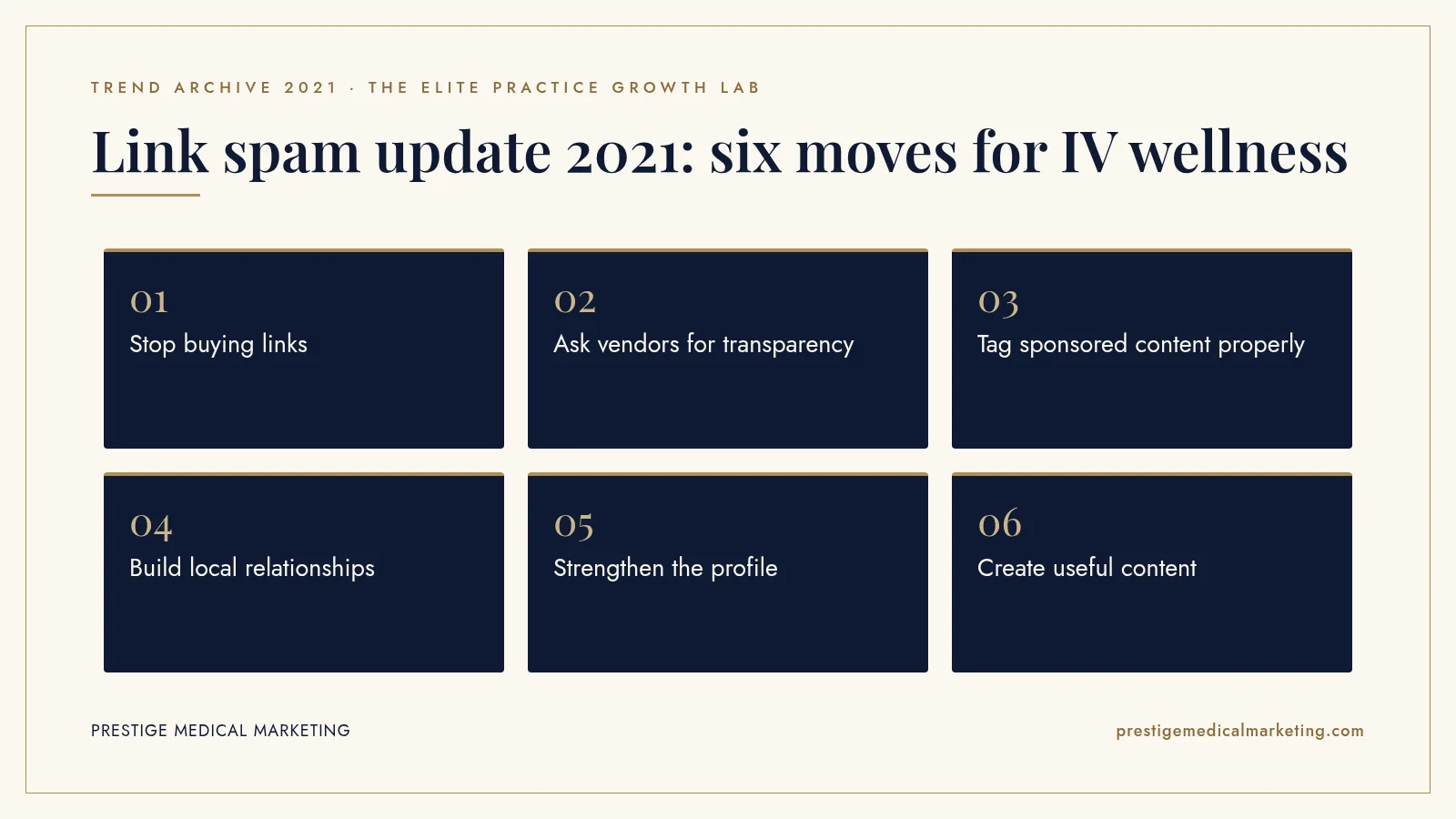
1. Stop buying links
Paid placements intended to pass ranking value are a fragile strategy that Google actively works to neutralize.
2. Ask vendors for transparency
If a vendor builds links, ask to see every one. Avoid networks of sites that exist only to sell placements.
3. Tag sponsored content properly
If the clinic sponsors an event or pays for a feature, make sure links are tagged appropriately.
4. Build local relationships
Partnerships with gyms, wellness events, local businesses and community groups can produce genuine mentions.
5. Strengthen the profile
Accurate Google Business Profile information and genuine reviews matter a great deal for local visibility.
6. Create useful content
Clear, accurate pages about services, safety and what to expect earn trust and links over time.

How to recognize a link scheme
Link vendors rarely describe their product as spam. Warning signs include guaranteed numbers of links per month, placements on sites with no clear audience, articles that exist only to link out, sites that publish on every topic imaginable and reluctance to share exact placements. If a vendor cannot explain why a real reader would value the article, the link is probably not worth the risk.
Local signals matter more for clinics
For a local IV wellness clinic, many of the most important visibility factors are local. Google has long said local ranking depends on relevance, distance and prominence. Prominence draws on information about how well known a business is, including reviews and mentions across the web. A clinic that is genuinely known in its community, with accurate listings and steady reviews, builds prominence naturally.
Content that earns attention
Useful content can attract links without buying them. A clear guide to what happens during an IV visit, an honest explanation of who should not receive IV therapy or a helpful page about hydration for local endurance events can be worth linking to. The key is accuracy. IV wellness content should avoid unsupported health claims and should be reviewed by a qualified clinician.
Community partnerships
Many clinics are well positioned for real partnerships: supporting a local race, hosting a wellness talk, partnering with a fitness studio or sponsoring a community event. These activities can produce genuine mentions on partner websites and local news. Where the clinic pays for sponsorship, links should be tagged appropriately, and the value lies in the relationship and exposure rather than in ranking signals.
Cleaning up a risky link profile
Clinics that bought links in the past may wonder whether to act. The first step is understanding what exists. Reviewing links in Google Search Console and asking past vendors for placement lists provides a picture. Google has said its systems work to detect and nullify link spam, but if the clinic receives a manual action for unnatural links, it should address it through Search Console and follow Google’s guidance. Stopping new paid placements is the most important step.
Claims and credibility
Link spam and exaggerated health claims often travel together. Articles placed on paid networks sometimes include claims about IV therapy that the clinic would never make on its own site. That creates both search and regulatory risk. Every piece of content associated with the clinic should be accurate and consistent with what its clinicians would say.
Measuring durable growth
Link counts are a poor measure of success. A better scorecard looks at calls, bookings, profile actions and revenue by source over time. Durable visibility grows steadily and survives algorithm updates. Visibility built on shortcuts tends to rise quickly and fall suddenly. Reviewing results monthly, and looking at trends across a full year rather than reacting to every fluctuation, gives the clinic a calmer and more accurate picture of what its marketing is really achieving.
Why the rel attributes exist
Google introduced more specific link attributes so site owners could describe the nature of a link. The sponsored value identifies links that are advertisements or paid placements. The ugc value identifies links in user-generated content such as comments and forum posts. The older nofollow value remains available for cases where a site does not want to associate itself with a linked page. These attributes are not punishments. They are labels that help Google understand which links represent genuine editorial endorsement and which do not.
For an IV wellness clinic, the practical point is simple. If money or free services changed hands in exchange for a link, that link is not an editorial endorsement, and it should be treated as sponsored. Being transparent about that protects the clinic and the publisher.
The hidden cost of link packages
Link packages often looked inexpensive compared with other marketing. A clinic might pay a modest monthly fee for a steady stream of placements. But the true cost included more than the invoice. There was the opportunity cost of not investing in reviews, content and local relationships. There was the risk of manual action. And there was the frustration of watching rankings stall or slip when the links stopped counting.
When clinics compared those costs with the steady results from improving their profile, website and patient experience, the choice became clearer. Durable work compounds. Shortcuts tend to expire.
Asking the right questions of a marketing partner
Clinic owners do not need to become search experts, but they should ask clear questions. Where will our visibility come from? Which links will you build and why would a real reader care about them? How will you measure success beyond rankings? What happens if Google changes its systems? A partner focused on durable growth will welcome those questions and answer them plainly. A partner selling shortcuts will often deflect.
Clear answers also make it easier to judge progress honestly. When the plan is transparent, the clinic can see what is working and adjust without guessing. Earned links take longer to build, but they rarely become a liability later. Quality wins.
What 2021 does not tell us
Google did not publish data on how many sites were affected by the July 2021 update or how much ranking changed for specific industries. There is no reliable public data on how IV wellness clinics as a group were affected. What 2021 does show is that Google intended to neutralize paid and manipulative links more effectively, and that clinics built on genuine local signals were far less exposed than those built on purchased links.
The premium practice advantage
A premium IV wellness clinic earns visibility the way it earns patients: through quality, consistency and genuine relationships. The work is building that presence carefully and measuring what actually drives bookings. See our IV and wellness services, our IV therapy marketing guide, our Maps and AI search work, our custom websites and our full services. Our team works from Austin with practices nationwide.
The bottom line
Google’s July 2021 link spam update, and its reminder to tag sponsored, guest and affiliate links, made purchased links a weaker and riskier strategy. For IV wellness clinics, the lasting lesson was to stop buying shortcuts and build visibility through local relationships, genuine reviews, accurate listings and content worth reading.
Check if your market is open. We take one practice per specialty per market. Request a market check or call (716) 400-0084.
Frequently asked questions
What did Google announce in July 2021?
On July 26, 2021, Google announced a link spam update that would roll out across the next two weeks, along with guidance on qualifying affiliate, sponsored and guest post links.
What was the link spam update designed to do?
Google said it was even more effective at identifying and nullifying link spam more broadly, across multiple languages.
How did Google want sponsored links tagged?
Google asked sites to qualify affiliate links with rel="sponsored" and recommended appropriate rel values for links in sponsored and guest posts.
Could sites face penalties?
Google said manual and algorithmic actions could be applied to sites publishing or acquiring links through excessive sponsored and guest posting without proper link tags.
Why did this matter for IV wellness clinics?
Some clinics and their vendors relied on paid guest posts and link packages to rank. The update reduced the value of those links and increased the risk.
How should a clinic earn links today?
Through genuine local relationships, useful content, community involvement, accurate directory listings and coverage that comes from doing something worth mentioning.