
In April 2024, the CDC issued a health alert about harmful reactions linked to counterfeit or mishandled botulinum toxin injections. The CDC ultimately reported 22 people in 11 states, 11 of whom were hospitalized, with many reporting injections from unlicensed or untrained individuals or in non-healthcare settings. For med spas, it meant patients cared more about who was injecting, what product was used and where it came from, so clear, honest safety information became part of earning trust.
Neurotoxin treatments are among the most popular services at med spas. Patients return regularly, recommend providers to friends and often build long relationships with a trusted injector. That trust depends on safety: patients assume that the product is genuine, the injector is qualified and the setting is appropriate.
In 2024, that assumption was tested. People in multiple states became ill after receiving botulinum toxin injections, and investigators found that many had been treated by unlicensed or untrained individuals or in non-healthcare settings, with products that may have been counterfeit or mishandled.
This retrospective covers what the CDC found, why it mattered for legitimate med spas and how to communicate safety honestly. For our specialty approach, see the med spa marketing guide.
What actually happened in 2024
The alert. On April 23, 2024, the CDC issued a Health Alert Network advisory, HAN 00507, about harmful reactions linked to counterfeit or mishandled botulinum toxin injections.
The cases. The CDC’s outbreak details reported 22 people in 11 states with harmful reactions. Eleven were hospitalized, six received botulism antitoxin and no deaths were reported.
The settings. Many affected people reported receiving injections from unlicensed or untrained individuals or in non-healthcare settings.
The products. Investigators suspected the products involved were counterfeit or mishandled, rather than authentic products used as directed.
The guidance. The CDC advised people to receive botulinum toxin injections only from licensed providers trained to give them, using products obtained from authorized sources.
Why it mattered for med spas
The outbreak did not involve legitimate, properly run med spas following the rules. But it affected how patients thought about injectable treatments. News coverage raised awareness that not every provider offering cosmetic injections is qualified, and that low prices can signal risk.
For legitimate med spas, that created both a challenge and an opportunity. Some patients became more cautious about injectables in general. Others became more willing to choose a provider who could clearly explain credentials, medical oversight and product sourcing. Practices that communicated safety well were in a better position to earn trust.
It also raised the bar for transparency. Patients started asking questions they might not have asked before: who will inject me, what product will you use and how do I know it is genuine?
What typical agencies did
Many agencies kept running price-focused promotions without addressing safety. Deep discounts on units, flash sales and influencer offers continued even as patients worried about counterfeit products and unqualified injectors.
Some agencies swung to fear-based messaging, implying that competitors were unsafe without evidence. That approach can backfire, damage industry trust and create legal risk.
Few helped med spas build calm, factual safety content that answered patient questions and supported premium positioning.
What it means for a med spa today
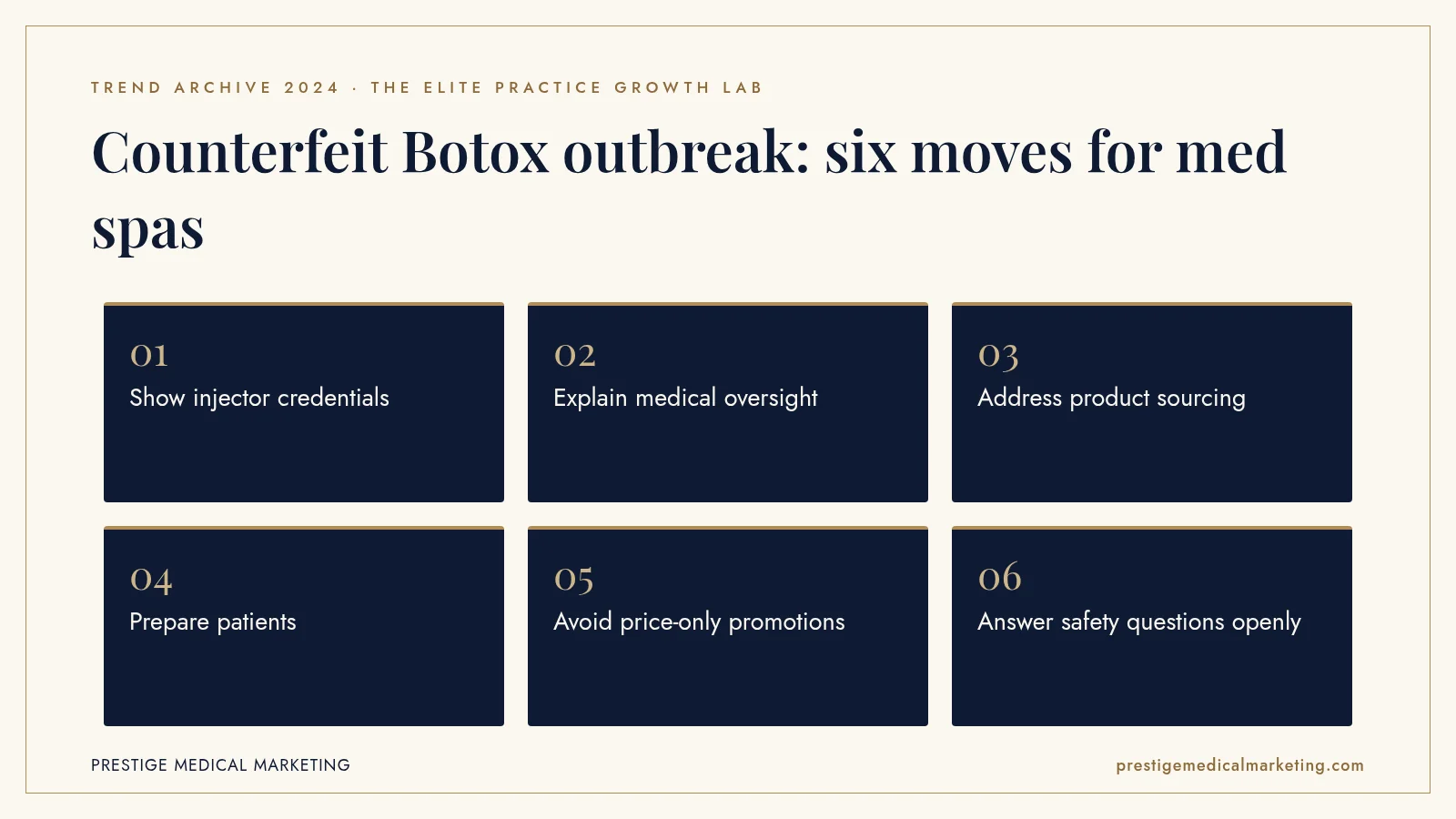
Safety is part of the brand. Here is how we help med spas communicate it.
1. Show injector credentials
Feature real provider bios with licenses, training and experience. Patients want to know who will treat them.
2. Explain medical oversight
Describe the medical director’s role and how treatment plans and complications are handled, in line with state rules.
3. Address product sourcing
If you purchase from authorized sources and keep records, say so clearly and accurately.
4. Prepare patients
Explain the consultation, consent and aftercare process, including what symptoms warrant a call.
5. Avoid price-only promotions
Lead with expertise and results rather than the lowest price per unit.
6. Answer safety questions openly
Create a frequently asked questions page that covers safety topics patients are asking about.

Safety content that builds trust
Patients researching injectables want reassurance without fear. Good safety content is calm, factual and specific. It explains that botulinum toxin treatments should be given by licensed, trained providers, describes how the med spa meets that standard and tells patients what to expect during and after treatment.
A short page on how to choose an injector can help. It can encourage patients to ask about credentials, oversight, product sourcing and aftercare, without attacking competitors. Patients who read that kind of guidance and then see that the med spa meets every point are more likely to book. Our work on med spa marketing uses this approach.
Video can help too, and so can photos of the actual treatment rooms. A provider explaining the consultation process or answering common safety questions builds familiarity and trust.
Pricing without racing to the bottom
Price matters to patients, but the outbreak showed the risks of chasing the lowest price. Counterfeit products can be cheaper, and unqualified injectors can charge less. A med spa competing only on price is competing in the wrong arena.
Clear pricing still helps. Patients appreciate knowing what treatments cost, how units or areas are priced and what is included. Membership programs and packages can offer value without deep discounting. The message should be that the price reflects qualified providers, genuine products and proper care. Our guide on reputation and premium pricing explains how trust supports pricing.
Reviews and reputation
Reviews are often where patients look first. Reviews that mention a provider by name, describe a careful consultation or praise follow-up care reinforce safety messages. Practices should ask satisfied patients for honest reviews and respond professionally to all feedback.
Complaints deserve careful handling. If a patient reports a reaction, the priority is patient care and appropriate clinical follow-up. Responses to public reviews should protect privacy and avoid discussing treatment details. A thoughtful response can show prospective patients that the practice takes concerns seriously.
Local search and AI answers
Patients increasingly ask Google or AI assistants where to get injectables nearby, and they may add words like safe, licensed or reputable. Search engines and AI tools draw on business profiles, reviews and website content to answer. Med spas that clearly describe credentials, oversight and safety practices give those systems useful information.
A complete Google Business Profile with accurate services, real photos and current hours helps too. Our guide to the med spa Google Business Profile covers the essentials.
Training the team
Front desk staff and patient coordinators often field the first safety questions. They should be able to explain who performs treatments, how products are sourced and what the consultation involves. Consistent answers build confidence. Staff should also know how to route clinical concerns to providers quickly.
Staff should never guess. If they do not know an answer, they should say so and connect the patient with a provider.
Regular training keeps answers current. When the practice updates policies or adds providers, the team should know what changed and how to explain it.
Inventory and documentation
Safety claims are only as strong as the systems behind them. Med spas should purchase products from authorized sources, keep invoices and lot records, store products according to manufacturer instructions and document each treatment, including product and lot information where appropriate.
That documentation protects patients and the practice. If a question arises about a product, the practice can trace where it came from. It also makes marketing claims about sourcing accurate and defensible. Practices should review these systems with their medical director and counsel to make sure they meet state requirements.
When patients ask about deals they found elsewhere
Patients sometimes mention a much cheaper offer they saw online or heard about from a friend, perhaps at a home party or from someone without a clear clinical setting. Staff should respond respectfully, without attacking the other provider. They can explain how the med spa works: licensed injectors, medical oversight, products from authorized sources and proper aftercare. Patients can then make their own informed decision.
That calm approach builds credibility. Patients who feel pressured or talked down to may leave. Patients who receive clear information often return, sometimes after a bad experience elsewhere.
Complication readiness
Even with genuine products and skilled injectors, complications can happen. Patients feel more comfortable when they know the med spa is prepared. Aftercare instructions should explain which symptoms are expected and which require a call. Patients should know how to reach the practice after hours and what will happen if they have a concern.
Being open about complication readiness is a strong safety message. It shows that the practice takes treatment seriously and will support patients if something goes wrong. That is very different from the experience of someone treated in a home setting by an untrained person with no follow-up.
Social media and influencer content
Social media drives much of the interest in injectables, and it was also one channel through which unqualified providers found clients. Posts offering cheap units, home visits or injection parties reached patients who might not have known what to ask. Legitimate med spas can use the same channels to educate.
Short videos explaining what a consultation involves, introducing injectors and their training, or answering common safety questions give followers useful information. Influencer partnerships should be handled carefully: content should be accurate, sponsored posts should be disclosed and results should not be exaggerated. A partner who promotes price above all else may attract the wrong patients.
Comments and direct messages are another opportunity. When someone asks whether treatments are safe, a clear, friendly answer that points to provider credentials and the consultation process can turn curiosity into a booking.
A safety page checklist
Every med spa offering injectables should review its website against a simple checklist. Are injector names, licenses and training visible? Is the medical director identified, with a description of their role? Does the site explain how products are sourced? Does it describe the consultation, consent and aftercare process? Does it tell patients how to reach the practice with concerns, including after hours? Does pricing explain what is included? Practices that can answer yes to each question are well positioned when patients compare options. Our med spa SEO work builds these pages so they are useful to patients and search engines alike.
What 2024 does not tell us
The CDC investigation documented a specific cluster of cases. It did not measure how common counterfeit products are overall or how often patients receive injections from unqualified providers. We do not have reliable data on how the outbreak changed patient behavior at legitimate med spas. What it does show is that safety risks are real and that patients benefit from clear information about who is treating them and with what.
The premium practice advantage
A premium med spa earns trust by being transparent. Patients know who is treating them, what product is used and what to do if something feels wrong. That transparency supports loyalty and fair pricing.
That is how we market med spas: credential-forward provider pages, calm safety content and visibility through Google Maps and AI search. See our services and who we help. Our team works from Austin with practices nationwide.
The bottom line
In 2024, the CDC investigated harmful reactions linked to counterfeit or mishandled botulinum toxin, often given by unlicensed or untrained individuals in non-healthcare settings. For legitimate med spas, the lesson was to communicate safety clearly: qualified injectors, medical oversight, authorized products and honest pricing.
Check if your market is open. We take one practice per specialty per market. Request a market check or call (716) 400-0084.
Frequently asked questions
What happened in the 2024 outbreak?
The CDC investigated harmful reactions in people who received botulinum toxin injections for cosmetic reasons. Many reported receiving injections from unlicensed or untrained individuals or in non-healthcare settings, and products were suspected to be counterfeit or mishandled.
How many people were affected?
The CDC reported 22 people in 11 states. Eleven were hospitalized and six were treated with botulism antitoxin. No deaths were reported.
When did the CDC issue its alert?
The CDC issued Health Alert Network advisory HAN 00507 on April 23, 2024.
What should patients look for in a provider?
Patients should confirm that injections are given by licensed, trained providers in appropriate settings, using products obtained from authorized sources. They can ask about these points before treatment.
How should med spas talk about safety?
Share accurate information about injector credentials, medical oversight, product sourcing and how to handle concerns. Avoid fear-based marketing or comparisons you cannot support.
Can med spas say they use authentic products?
Only if it is true and documented. Practices should purchase from authorized sources, keep records and describe their practices accurately.