
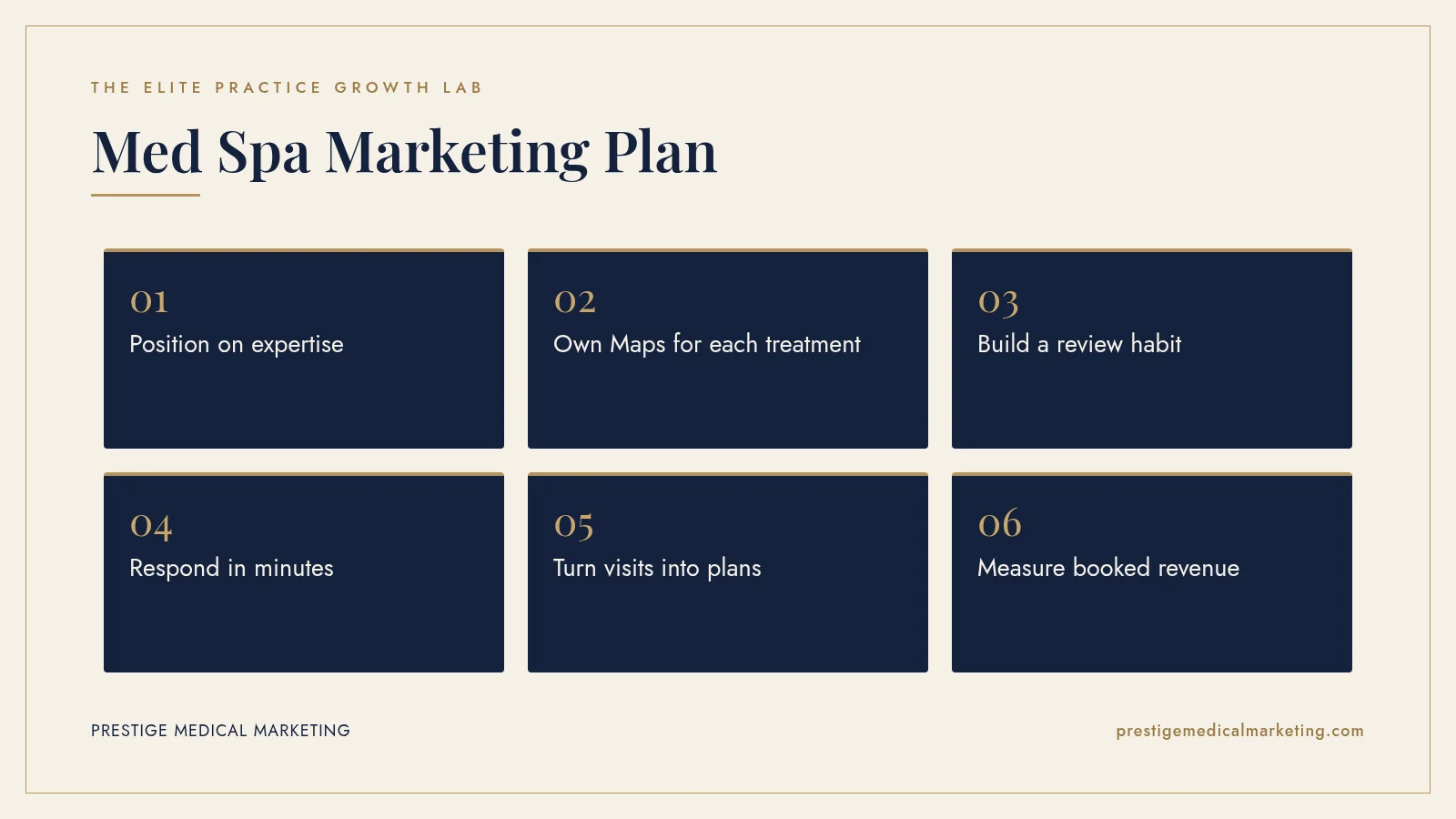
Effective med spa marketing positions the practice on expertise and experience rather than discounts, ranks in Google Maps for each core treatment, builds a steady stream of genuine reviews, responds to inquiries within minutes, and turns first visits into memberships or treatment plans. Success is measured by booked, returning clients and revenue, not likes or clicks.
Med spas face a unique challenge: lots of competition, lots of similar services, and lots of marketing that leads with price. The med spas that grow sustainably do something different. They market their expertise and experience, and they build systems that keep clients coming back.
Where med spa marketing goes wrong, and how we do it instead
They race to the bottom on price. We sell expertise.
The cheapest unit price in town attracts clients who leave for the next coupon. We position your injectors, your medical oversight and your client experience, so clients choose you for the result, not the deal.
They post daily and hope. We build for bookings.
A busy Instagram feed does not fill a schedule on its own. We build the pieces that turn attention into appointments: treatment pages, a complete map listing, fast replies and online booking.
They promise results. We stay within the rules.
Med spa ads sit in a regulated space. The FTC’s health products compliance guidance requires health claims to be backed by competent and reliable scientific evidence. We write confident copy without guarantees, and we use before-and-after photos only with written consent.
They lock you into contracts. We earn your business monthly.
Long contracts protect agencies, not practices. We work month to month and take one med spa per market, so we never split our attention between you and the competitor down the street.
They report vanity metrics. We report revenue.
Our monthly ROI reporting shows booked consults, treatment revenue and repeat visits by source. If something does not produce clients, we cut it.

Check if your market is open. We partner with one med spa per market. Request a market check or call (716) 400-0084.
Start with positioning, not promotions
When every med spa in town advertises the same injectable special, price becomes the only difference. Decide what you want to be known for instead: a lead injector’s experience, a specialty in skin health, a medical director’s oversight, or a calm, luxurious experience. Lead with that everywhere: your homepage headline, your Google profile description, your social bios and the way your front desk answers the phone. When the message is consistent, clients start to repeat it back to you, and that is when positioning starts to work.
Own Google Maps for each core treatment
Clients search “lip filler near me” or “laser hair removal [city]” when they’re ready to book. Make sure your Google profile lists every treatment, your categories are right, and your photos show your real space. Pair it with a dedicated page for each core treatment. Our med spa marketing program is built around this. For the full setup, read our med spa Google Business Profile guide, and for the website side, our med spa SEO guide.
Build a review habit
Ask every happy client for a review, make it one tap, and encourage them to mention the treatment. Reviews like “my injector was so careful and natural-looking” do more selling than any ad. Ask every client, not just the ones who seemed happiest, and never offer rewards for reviews. The FTC’s 2024 rule on fake reviews bans incentivized reviews and review suppression. Reply to each review briefly and never confirm treatment details.
Respond in minutes, book on the spot
Med spa inquiries often come in evenings and weekends, when your team is home. Answer quickly, offer specific appointment times, and let people book online. A 24/7 AI receptionist can handle common questions and scheduling while your team is treating clients. Track how fast each inquiry gets a reply, and review missed calls and unanswered messages every week until the gaps close.
Turn first visits into relationships
- Treatment plans: map out a series, not a single session.
- Memberships: predictable revenue for you, value for the client.
- Rebooking reminders: timed to when results typically start to fade for each treatment.
- Experience: small touches clients talk about and review.
Memberships that keep the book full
A well-built membership turns one-time visitors into clients who return every month. Keep it simple: one or two tiers, a clear monthly price, a benefit clients actually use, such as a monthly facial or savings on neurotoxin, and easy terms. Explain it on its own page, train the front desk to offer it at checkout and track member retention by source. Members smooth out slow months and make your revenue easier to plan around. Our post on what missed calls cost shows why every inquiry from a potential member deserves a fast answer.
Use social media for proof, not just reach
Instagram and TikTok work best when they show real expertise: consented before-and-afters, provider education and behind-the-scenes. Point that attention toward booking, not just follows.
Put a booking link in your profile, pin posts that explain your top treatments and answer comments and messages within hours. Show your injectors explaining technique, your space in good light and the small details that make a visit feel special. Keep every post honest: real clients with consent, no heavy filters on results and no promises about outcomes.
Paid ads that follow the rules
Google and Meta both restrict ads for prescription drugs and some medical treatments. Google’s healthcare and medicines policy limits how prescription drugs like neurotoxins can be named in ads, and Meta’s drugs and pharmaceuticals policy sets its own limits. Practical rules that keep campaigns running:
- Advertise the consultation, the experience and the treatment category rather than a prescription brand name.
- Avoid before-and-after imagery in ads unless the platform allows it.
- Never target or imply personal health conditions in ad copy.
- Send every campaign to a matching treatment page with online booking.
- Judge campaigns on cost per booked consult and treatment revenue, not clicks.
Content that books consults
Clients research before they book, especially for higher-ticket treatments. Pages and articles that answer their questions build trust and rankings at the same time:
- “How much does lip filler cost in [city]?”
- “Neurotoxin vs. filler: what is the difference?”
- “What to expect at your first laser treatment”
- “How to choose an injector”
- “How long do results last, and when should you rebook?”
Each piece should link to the matching treatment page and end with a clear booking option.
The client experience is marketing
The best med spa marketing happens after the client walks in. A calm, beautiful reception, a provider who listens, a clear plan and a follow-up text the next day all turn a first visit into a relationship. Those details are what clients mention in reviews and tell their friends about. Map the whole visit, from the first call to the rebooking reminder, and remove anything that feels rushed, confusing or transactional. A great experience makes every other channel work harder.
Measure what matters
Likes, followers and clicks are easy to count and easy to misread. Track booked consults, treatment revenue and repeat visits by source, then compare with spend. That’s the number that tells you which marketing to keep and which to cut. We report it monthly as your marketing ROI.
A simple 90-day plan for med spas
- Days 1-30: tighten your positioning, fix your Google profile, and build or improve pages for your top three treatments.
- Days 31-60: start a daily review habit, set up fast follow-up and after-hours coverage, and launch a value-led offer (consult or package).
- Days 61-90: introduce a membership or treatment-plan option, add rebooking reminders, and review booked revenue by source.
Compliance reminders
Med spa rules vary by state, especially around medical director oversight, who can perform which treatments and how you can advertise them. Follow your state rules and platform policies for medical advertising, use before-and-after photos only with written consent, avoid guarantees about results, and make sure claims about products and devices match their approved uses.
Questions to ask a med spa marketing agency
- What will you report each month? Booked consults, treatment revenue and repeat visits by source.
- How do you handle ad platform rules for injectables? They should know the policies in detail.
- Who owns the website, ad accounts and Google profile? You should.
- Do you work with other med spas near me? One med spa per market is the only setup that protects your strategy.
- What are the terms? Month-to-month keeps an agency focused on results.
The bottom line
Med spa growth doesn’t come from the deepest discount, the most posts or the biggest ad budget. It comes from a clear position, strong local visibility, real reviews, fast follow-up and a client experience that brings people back. Build those five things, measure them every month and keep improving the weakest one first.
Check if your market is open. We take one med spa per market. See if yours is still open or call (716) 400-0084. We’re based in Austin, Texas, and work with med spas nationwide. We also help dermatology practices and longevity clinics.
Put this playbook to work: see how it applies to the Prestige System for medical practice marketing.
Frequently asked questions
What is the best marketing channel for a med spa?
For most med spas, Google Maps and local search are the foundation because clients search when they are ready to book. Social media and paid ads work best on top of a strong local presence.
Should my med spa run discounts?
Use them sparingly and frame them around value, such as a consultation, a package or a membership. Constant discounts attract clients who leave for the next deal.
How do med spas get repeat clients?
Treatment plans, memberships, timely rebooking reminders and a memorable experience. Repeat clients are usually far more profitable than one-time visitors.
Do I need a page for every treatment?
Yes, for the treatments you want more of. Dedicated pages help you rank for those treatments and answer the questions clients ask before booking.
How much should a med spa spend on marketing?
Set the budget from your numbers: what a booked client is worth over a year and what you can afford to pay to acquire one. Start with the foundation of local search, reviews and follow-up, then add paid channels as you prove what a booked client costs.
Can a med spa advertise Botox on Google or Facebook?
Both platforms restrict ads for prescription drugs, including neurotoxins. Many med spas advertise the consultation and the treatment category instead of the brand name. Check each platform's current policy before launching.
How fast should a med spa reply to a new inquiry?
Within minutes during business hours and as fast as possible after hours. Clients often contact several med spas at once, and the first helpful reply usually wins the booking.